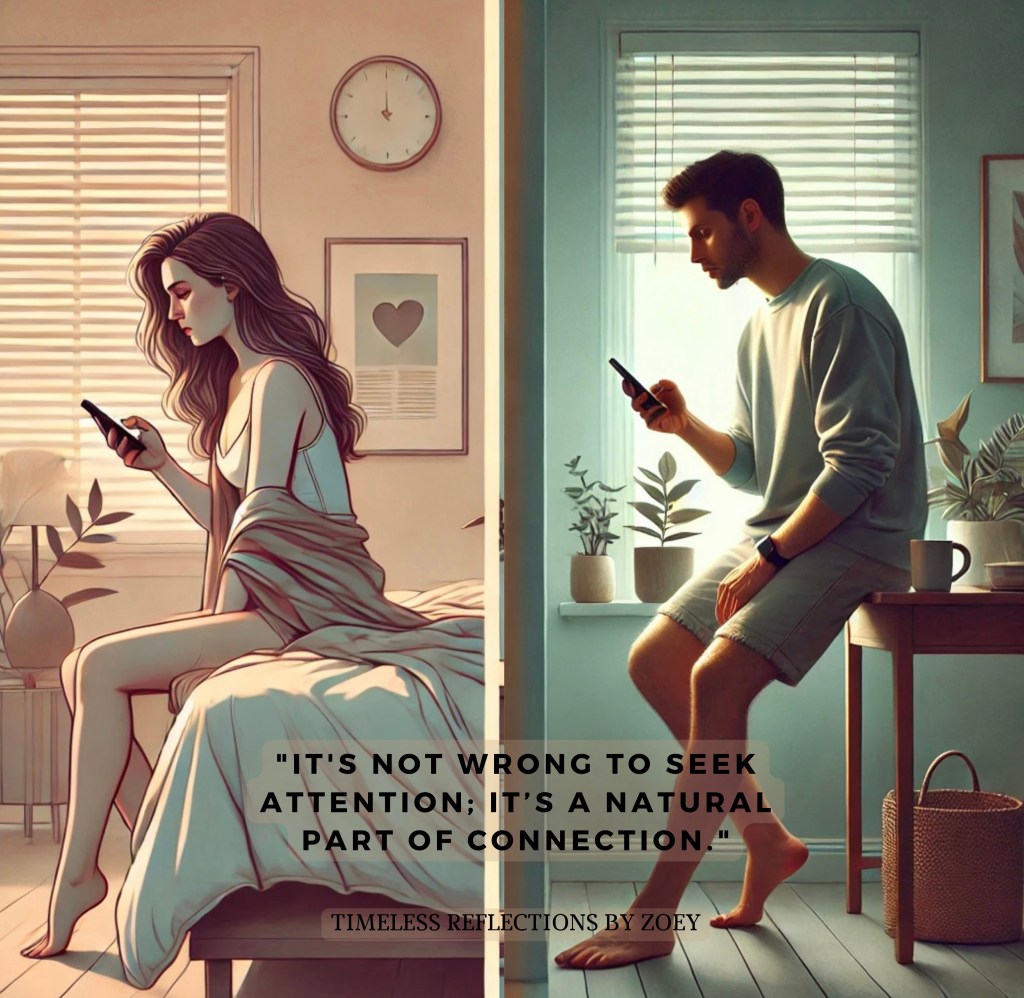
There’s a certain sting when someone you love deeply calls you an “attention seeker.” Recently, those words hit me hard. The person I trusted and cared for said, “I know you’re an attention seeker. Stop trying to get attention all the time.” The words were like sharp arrows, unexpected and painful. I found myself questioning my intentions, my behaviors, and ultimately, my worth. Am I truly an attention seeker? Is that such a bad thing?
What Does It Mean to Be an “Attention Seeker”?
We’ve all heard the term, but what does it actually mean? The phrase “attention seeker” is often used in a negative light, implying that someone is acting out or exaggerating emotions to get validation from others. It can carry connotations of neediness, manipulation, or insecurity.
However, seeking attention isn’t inherently negative. Attention, at its core, is about connection. As human beings, we are wired to crave emotional connection and recognition. Whether it’s in friendships, romantic relationships, or family dynamics, attention is part of how we feel valued and seen. When someone says you’re seeking attention, it may not necessarily mean you’re doing something wrong—but it can feel like an accusation, as though needing attention is shameful.
The Hurt Behind the Words
Hearing those words from someone you love adds another layer of hurt. When I was recently told that I am an attention seeker, I felt as if my needs were being dismissed, like I was being told that wanting his attention wasn’t valid. His words felt harsh, as if I was being criticized for a basic human need. In that moment, it wasn’t just about the words themselves; it was about what they implied—that I wasn’t worthy of the attention I sought, that I was somehow doing something wrong for needing to feel seen and heard.
Why Do We Seek Attention in Relationships?
We all have emotional needs, and in close relationships, it’s natural to seek attention, validation, and support. This doesn’t make someone manipulative or selfish—it makes them human. According to psychologist Dr. Harriet Lerner, people often seek attention when their emotional needs aren’t being met. Whether it’s feeling unheard, neglected, or emotionally distant from a partner, these unmet needs can lead to behaviors that are perceived as “attention-seeking.”
In my case, I realized that I wasn’t just seeking random attention—I was craving emotional connection, reassurance, and intimacy. When those needs go unmet, it’s easy to feel like you have to shout to be heard, emotionally speaking.
Is Attention-Seeking Really a Bad Thing?
The negative connotation of “attention seeker” stems from the idea that seeking validation makes someone needy or insecure. But it’s important to recognize that everyone needs attention at some point. Asking for attention doesn’t automatically make you selfish or manipulative—it’s a sign that something in the relationship may need addressing.
Experts in emotional health emphasize the importance of understanding why we seek attention. Dr. Kristen Neff, a leading researcher in self-compassion, argues that self-awareness and self-compassion are key to understanding our emotional needs. Rather than feeling ashamed or guilty about needing attention, it’s important to approach those feelings with kindness and ask yourself: What am I really seeking? Is it love, connection, validation, or reassurance?
Self-Reflection: Questions to Ask Yourself
If you’ve been called an “attention seeker,” here are some questions to reflect on that might help you better understand your own emotions and needs:
– Am I seeking validation because I feel emotionally neglected?
– Do I feel like my needs are being dismissed or invalidated in this relationship?
– Is my partner aware of the emotional support I need, or have I been suppressing these feelings?
– Am I expressing my need for connection in ways that are clear and healthy, or am I acting out of frustration?
– How can I better communicate my emotional needs without feeling ashamed of them?
The Impact on Emotional Well-being
Being labeled as an attention seeker can lead to feelings of shame, self-doubt, and even insecurity. When those words come from someone close to you, it can feel like an attack on your character, leaving you questioning your self-worth. But it’s essential to understand that needing attention isn’t wrong—it’s part of being human.
By learning to articulate your emotional needs and recognizing when they’re not being met, you can have healthier conversations with your partner. Let them know how their words impacted you and explain what kind of emotional connection you’re truly seeking. It’s not about attention for attention’s sake—it’s about being seen, understood, and valued.
The Importance of Emotional Needs
According to Dr. Sue Johnson, creator of Emotionally Focused Therapy (EFT), healthy relationships are built on emotional responsiveness. In her research, Johnson emphasizes the importance of partners being emotionally available and responsive to each other’s needs. When emotional needs are unmet, individuals might resort to seeking attention in ways that are misunderstood or dismissed.
Johnson’s work highlights that the desire for attention is often a cry for connection, safety, and emotional security within the relationship. When those needs are recognized and addressed, couples can deepen their emotional bond rather than feeling alienated by labels like “attention seeker.”
Reframing the Narrative: You Deserve to Be Seen
Ultimately, being called an “attention seeker” should prompt deeper reflection—both for you and your partner. It’s not about pointing fingers or assigning blame, but about recognizing that emotional needs exist for a reason. You deserve to feel seen, heard, and valued in your relationships, just as your partner does. If those needs aren’t being met, it’s time to have a conversation, not hide behind labels.
In Conclusion: Seeking Attention Isn’t Wrong
When someone you love calls you an attention seeker, it can feel hurtful, dismissive, and even shaming. But attention isn’t something to be ashamed of—it’s a natural part of emotional connection. What matters is how you communicate those needs and whether your partner is willing to meet you halfway.
‘It’s not wrong to seek attention. It’s wrong to deny the attention we all need to thrive.’— TIMELESS REFLECTIONS BY ZOEY
 TIMELESS REFLECTIONS BY ZOEY
Leave a comment