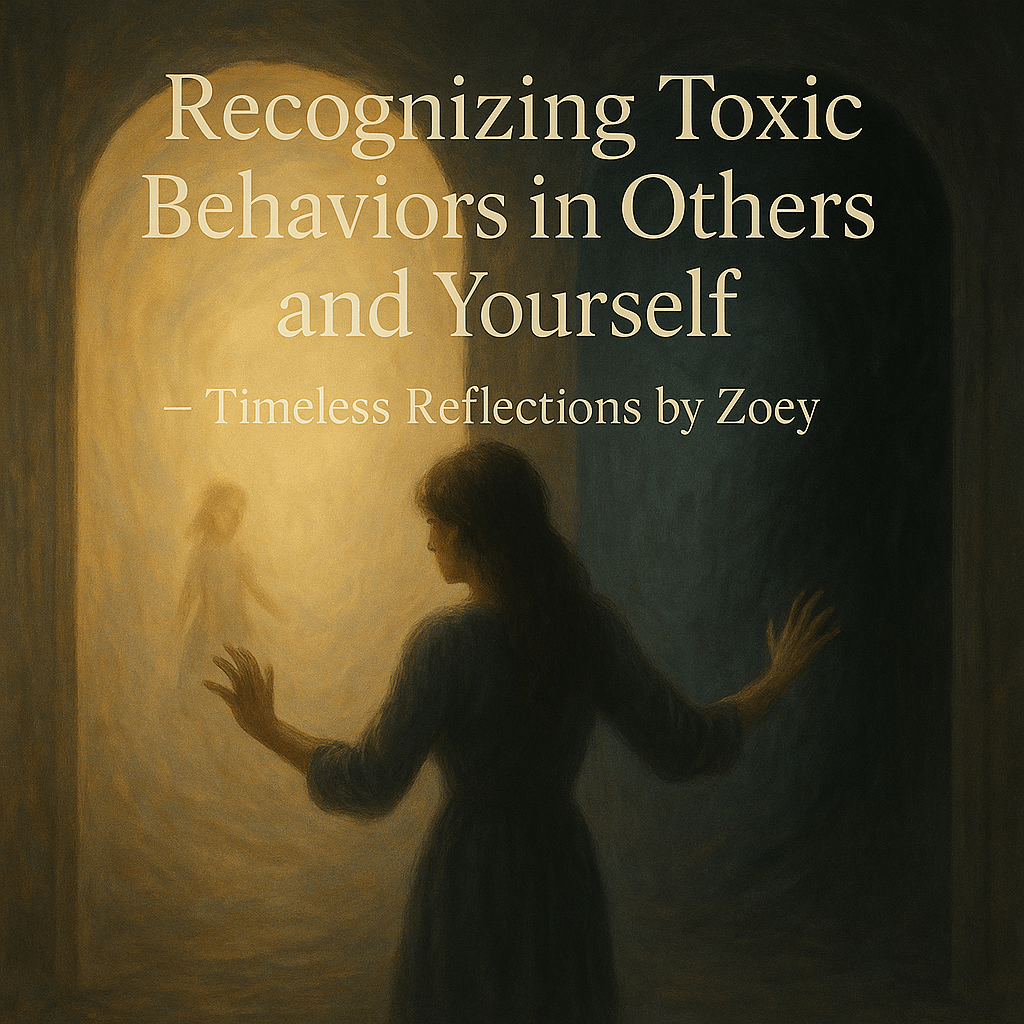
It is easy to point fingers.
To say, “They were toxic. They hurt me.”
And maybe they did. Maybe they still are.
But the deeper work—the kind that requires real courage—is looking into the mirror and asking, “Have I ever been the one causing pain?”
I have stood on both sides of that mirror.
I have been the one who was hurt. Blamed. Misunderstood.
And I have also been the one who shut down. The one who lashed out.
The one who did not know how to express hurt without turning it into anger.
The truth is, toxic behaviors do not always arrive loudly.
They do not always come with shouting or manipulation.
Sometimes, they are quieter. Slower. Almost invisible.
But they can still leave deep, lasting scars.
Understanding What Toxic Behavior Really Is
Toxic behavior is anything that repeatedly causes emotional harm—whether to yourself or to others.
According to clinical psychologist Dr. Lindsay Gibson, toxic traits often come from emotional immaturity, not necessarily cruelty. She writes,
“Emotionally immature people are not always evil, but their behavior can still have damaging effects on those around them.”
Toxicity is not a label. It is a pattern.
A pattern rooted in fear, in wounds that never healed, in the desire to control or to protect what feels fragile inside.
It is not always about malice.
But it is always about impact.
Common Toxic Behaviors—In Others and Sometimes In Us
- Gaslighting: Making someone question their feelings or memory
- Blame-shifting: Refusing responsibility and placing fault elsewhere
- The silent treatment: Withholding communication as punishment
- Control: Trying to dictate someone’s choices, feelings, or voice
- Passive aggression: Expressing anger in indirect, confusing ways
- Guilt-tripping: Using someone’s empathy as a weapon
And here is the part that stings a little:
Most of us have done one or more of these—especially when we are overwhelmed, hurt, or afraid.
What Helped Me Begin to Recognize It in Myself
- Listening Without Defensiveness
When someone told me I had hurt them, I used to say, “But that was not my intention.”
Now, I pause and say, “Please tell me how.”
Because my intention may matter—but their experience matters more. - Noticing My Emotional Patterns
If every disagreement turns into a battle… if I always feel the need to be right…
Then it is time to reflect, not react. - Watching My Tone and Timing
Sarcasm, long silences, raised voices—they usually come from something deeper.
I now ask myself, “What am I really trying to say beneath this reaction?” - Understanding Where It Came From
I did not grow up with the best emotional tools.
That is not my fault.
But choosing to heal from it? That is my responsibility now.
When the Behavior Is Coming From Someone Else
If someone repeatedly crosses your boundaries, drains your energy, or causes you to question your worth—
You are not too sensitive.
You are self-aware.
You are awake to what your spirit no longer wants to tolerate.
Setting boundaries is not cruelty.
Choosing distance is not selfishness.
Protecting your peace is not a betrayal—it is an act of love.
For them. For you. For the future you are still becoming.
“Healing is not just about protecting yourself from toxicity.
It is also about recognizing the moments when you may have unknowingly passed it on.
Real growth begins when honesty meets compassion.”
— Timeless Reflections by Zoey
 TIMELESS REFLECTIONS BY ZOEY
Leave a comment